2030 Plastics Agenda for Business

After a decade of concerted effort, leading companies have bent the curve on virgin plastics in packaging. The Ellen MacArthur Foundation’s new 2030 Plastics Agenda for Business provides the blueprint to build on this progress in eliminating plastic waste and pollution in the years ahead.

Over the past ten years, more than 1,200 businesses and organisations have united behind a shared vision for plastics. Through the Global Commitment, companies representing 20% of global plastic packaging have already demonstrated that change is possible. They are ahead of increasing regulation and are using the circular economy as a competitive strategy to build long term resilience. Now, with growing policy attention, the next five years will be decisive.

2030 Plastics Agenda for Business

After a decade of concerted effort, leading companies have bent the curve on virgin plastics in packaging. The Ellen MacArthur Foundation’s new 2030 Plastics Agenda for Business provides the blueprint to build on this progress in eliminating plastic waste and pollution in the years ahead.

Over the past ten years, more than 1,200 businesses and organisations have united behind a shared vision for plastics. Through the Global Commitment, companies representing 20% of global plastic packaging have already demonstrated that change is possible. They are ahead of increasing regulation and are using the circular economy as a competitive strategy to build long term resilience. Now, with growing policy attention, the next five years will be decisive.

2030 Plastics Agenda for Business

After a decade of concerted effort, leading companies have bent the curve on virgin plastics in packaging. The Ellen MacArthur Foundation’s new 2030 Plastics Agenda for Business provides the blueprint to build on this progress in eliminating plastic waste and pollution in the years ahead.

Over the past ten years, more than 1,200 businesses and organisations have united behind a shared vision for plastics. Through the Global Commitment, companies representing 20% of global plastic packaging have already demonstrated that change is possible. They are ahead of increasing regulation and are using the circular economy as a competitive strategy to build long term resilience. Now, with growing policy attention, the next five years will be decisive.

2030 Plastics Agenda for Business

After a decade of concerted effort, leading companies have bent the curve on virgin plastics in packaging. The Ellen MacArthur Foundation’s new 2030 Plastics Agenda for Business provides the blueprint to build on this progress in eliminating plastic waste and pollution in the years ahead.

Over the past ten years, more than 1,200 businesses and organisations have united behind a shared vision for plastics. Through the Global Commitment, companies representing 20% of global plastic packaging have already demonstrated that change is possible. They are ahead of increasing regulation and are using the circular economy as a competitive strategy to build long term resilience. Now, with growing policy attention, the next five years will be decisive.

2030 Plastics Agenda for Business

After a decade of concerted effort, leading companies have bent the curve on virgin plastics in packaging. The Ellen MacArthur Foundation’s new 2030 Plastics Agenda for Business provides the blueprint to build on this progress in eliminating plastic waste and pollution in the years ahead.

Over the past ten years, more than 1,200 businesses and organisations have united behind a shared vision for plastics. Through the Global Commitment, companies representing 20% of global plastic packaging have already demonstrated that change is possible. They are ahead of increasing regulation and are using the circular economy as a competitive strategy to build long term resilience. Now, with growing policy attention, the next five years will be decisive.

2030 Plastics Agenda for Business

After a decade of concerted effort, leading companies have bent the curve on virgin plastics in packaging. The Ellen MacArthur Foundation’s new 2030 Plastics Agenda for Business provides the blueprint to build on this progress in eliminating plastic waste and pollution in the years ahead.

Over the past ten years, more than 1,200 businesses and organisations have united behind a shared vision for plastics. Through the Global Commitment, companies representing 20% of global plastic packaging have already demonstrated that change is possible. They are ahead of increasing regulation and are using the circular economy as a competitive strategy to build long term resilience. Now, with growing policy attention, the next five years will be decisive.

A business-backed agenda to drive market transformation

Drawing on ten years of experience, the 2030 Plastics Agenda for Business identifies a clear set of priority actions for business. While individual company action has been — and remains — essential, it will not be enough on its own. The next wave of progress requires market transformation. We urge businesses to back this agenda, engage in collaborative action and collective advocacy — and don't get left behind.

A business-backed agenda to drive market transformation

Drawing on ten years of experience, the 2030 Plastics Agenda for Business identifies a clear set of priority actions for business. While individual company action has been — and remains — essential, it will not be enough on its own. The next wave of progress requires market transformation. We urge businesses to back this agenda, engage in collaborative action and collective advocacy — and don't get left behind.

A business-backed agenda to drive market transformation

Drawing on ten years of experience, the 2030 Plastics Agenda for Business identifies a clear set of priority actions for business. While individual company action has been — and remains — essential, it will not be enough on its own. The next wave of progress requires market transformation. We urge businesses to back this agenda, engage in collaborative action and collective advocacy — and don't get left behind.

A business-backed agenda to drive market transformation

Drawing on ten years of experience, the 2030 Plastics Agenda for Business identifies a clear set of priority actions for business. While individual company action has been — and remains — essential, it will not be enough on its own. The next wave of progress requires market transformation. We urge businesses to back this agenda, engage in collaborative action and collective advocacy — and don't get left behind.

A business-backed agenda to drive market transformation

Drawing on ten years of experience, the 2030 Plastics Agenda for Business identifies a clear set of priority actions for business. While individual company action has been — and remains — essential, it will not be enough on its own. The next wave of progress requires market transformation. We urge businesses to back this agenda, engage in collaborative action and collective advocacy — and don't get left behind.

A business-backed agenda to drive market transformation

Drawing on ten years of experience, the 2030 Plastics Agenda for Business identifies a clear set of priority actions for business. While individual company action has been — and remains — essential, it will not be enough on its own. The next wave of progress requires market transformation. We urge businesses to back this agenda, engage in collaborative action and collective advocacy — and don't get left behind.

Tackling the systemic barriers

Even the most ambitious businesses are running up against the same obstacles — scaling reuse systems, tackling flexible plastic waste, and building collection and recycling infrastructure. These are systemic barriers that no company can overcome alone. Policy gaps, misaligned incentives, and current economics are holding back progress at scale.

This agenda underlines the crucial role of government in tackling these barriers. But businesses have a vital role to play in advocating for these enabling conditions, using their collective influence to shape the rules of the game.

Tackling the systemic barriers

Even the most ambitious businesses are running up against the same obstacles — scaling reuse systems, tackling flexible plastic waste, and building collection and recycling infrastructure. These are systemic barriers that no company can overcome alone. Policy gaps, misaligned incentives, and current economics are holding back progress at scale.

This agenda underlines the crucial role of government in tackling these barriers. But businesses have a vital role to play in advocating for these enabling conditions, using their collective influence to shape the rules of the game.

Tackling the systemic barriers

Even the most ambitious businesses are running up against the same obstacles — scaling reuse systems, tackling flexible plastic waste, and building collection and recycling infrastructure. These are systemic barriers that no company can overcome alone. Policy gaps, misaligned incentives, and current economics are holding back progress at scale.

This agenda underlines the crucial role of government in tackling these barriers. But businesses have a vital role to play in advocating for these enabling conditions, using their collective influence to shape the rules of the game.

Tackling the systemic barriers

Even the most ambitious businesses are running up against the same obstacles — scaling reuse systems, tackling flexible plastic waste, and building collection and recycling infrastructure. These are systemic barriers that no company can overcome alone. Policy gaps, misaligned incentives, and current economics are holding back progress at scale.

This agenda underlines the crucial role of government in tackling these barriers. But businesses have a vital role to play in advocating for these enabling conditions, using their collective influence to shape the rules of the game.

Tackling the systemic barriers

Even the most ambitious businesses are running up against the same obstacles — scaling reuse systems, tackling flexible plastic waste, and building collection and recycling infrastructure. These are systemic barriers that no company can overcome alone. Policy gaps, misaligned incentives, and current economics are holding back progress at scale.

This agenda underlines the crucial role of government in tackling these barriers. But businesses have a vital role to play in advocating for these enabling conditions, using their collective influence to shape the rules of the game.

Tackling the systemic barriers

Even the most ambitious businesses are running up against the same obstacles — scaling reuse systems, tackling flexible plastic waste, and building collection and recycling infrastructure. These are systemic barriers that no company can overcome alone. Policy gaps, misaligned incentives, and current economics are holding back progress at scale.

This agenda underlines the crucial role of government in tackling these barriers. But businesses have a vital role to play in advocating for these enabling conditions, using their collective influence to shape the rules of the game.

The power of joining forces

By joining forces, businesses can go further and faster, stimulating effective policy and lowering the cost of transition. Through collective advocacy, businesses can speak with one voice and help create the conditions for all players to benefit. Through collaborative action, businesses can pool risks and establish new behaviours, infrastructure, and supply chains, while demonstrating where policy gaps remain.

The power of joining forces

By joining forces, businesses can go further and faster, stimulating effective policy and lowering the cost of transition. Through collective advocacy, businesses can speak with one voice and help create the conditions for all players to benefit. Through collaborative action, businesses can pool risks and establish new behaviours, infrastructure, and supply chains, while demonstrating where policy gaps remain.

The power of joining forces

By joining forces, businesses can go further and faster, stimulating effective policy and lowering the cost of transition. Through collective advocacy, businesses can speak with one voice and help create the conditions for all players to benefit. Through collaborative action, businesses can pool risks and establish new behaviours, infrastructure, and supply chains, while demonstrating where policy gaps remain.

The power of joining forces

By joining forces, businesses can go further and faster, stimulating effective policy and lowering the cost of transition. Through collective advocacy, businesses can speak with one voice and help create the conditions for all players to benefit. Through collaborative action, businesses can pool risks and establish new behaviours, infrastructure, and supply chains, while demonstrating where policy gaps remain.

The power of joining forces

By joining forces, businesses can go further and faster, stimulating effective policy and lowering the cost of transition. Through collective advocacy, businesses can speak with one voice and help create the conditions for all players to benefit. Through collaborative action, businesses can pool risks and establish new behaviours, infrastructure, and supply chains, while demonstrating where policy gaps remain.

The power of joining forces

By joining forces, businesses can go further and faster, stimulating effective policy and lowering the cost of transition. Through collective advocacy, businesses can speak with one voice and help create the conditions for all players to benefit. Through collaborative action, businesses can pool risks and establish new behaviours, infrastructure, and supply chains, while demonstrating where policy gaps remain.

Priority actions for business

This 2030 agenda is, intentionally, not an exhaustive list of all actions required. Mobilising large-scale collective action and advocacy demands focus. This agenda provides that focus, setting out some of the highest-priority actions, informed by a decade of mobilising the industry.

By combining collective advocacy, collaborative action, and individual action, businesses can help transform the market, with priority actions targeting each systemic barrier. By following this agenda, the industry can concentrate its collective effort to accelerate the elimination of plastic waste and pollution.

Priority actions for business

This 2030 agenda is, intentionally, not an exhaustive list of all actions required. Mobilising large-scale collective action and advocacy demands focus. This agenda provides that focus, setting out some of the highest-priority actions, informed by a decade of mobilising the industry.

By combining collective advocacy, collaborative action, and individual action, businesses can help transform the market, with priority actions targeting each systemic barrier. By following this agenda, the industry can concentrate its collective effort to accelerate the elimination of plastic waste and pollution.

Priority actions for business

This 2030 agenda is, intentionally, not an exhaustive list of all actions required. Mobilising large-scale collective action and advocacy demands focus. This agenda provides that focus, setting out some of the highest-priority actions, informed by a decade of mobilising the industry.

By combining collective advocacy, collaborative action, and individual action, businesses can help transform the market, with priority actions targeting each systemic barrier. By following this agenda, the industry can concentrate its collective effort to accelerate the elimination of plastic waste and pollution.

Priority actions for business

This 2030 agenda is, intentionally, not an exhaustive list of all actions required. Mobilising large-scale collective action and advocacy demands focus. This agenda provides that focus, setting out some of the highest-priority actions, informed by a decade of mobilising the industry.

By combining collective advocacy, collaborative action, and individual action, businesses can help transform the market, with priority actions targeting each systemic barrier. By following this agenda, the industry can concentrate its collective effort to accelerate the elimination of plastic waste and pollution.

Priority actions for business

This 2030 agenda is, intentionally, not an exhaustive list of all actions required. Mobilising large-scale collective action and advocacy demands focus. This agenda provides that focus, setting out some of the highest-priority actions, informed by a decade of mobilising the industry.

By combining collective advocacy, collaborative action, and individual action, businesses can help transform the market, with priority actions targeting each systemic barrier. By following this agenda, the industry can concentrate its collective effort to accelerate the elimination of plastic waste and pollution.

Priority actions for business

This 2030 agenda is, intentionally, not an exhaustive list of all actions required. Mobilising large-scale collective action and advocacy demands focus. This agenda provides that focus, setting out some of the highest-priority actions, informed by a decade of mobilising the industry.

By combining collective advocacy, collaborative action, and individual action, businesses can help transform the market, with priority actions targeting each systemic barrier. By following this agenda, the industry can concentrate its collective effort to accelerate the elimination of plastic waste and pollution.

The Foundation’s ongoing role

We will focus our efforts on tackling the systemic barriers to progress — by publishing evidence, informing policymakers, and supporting increasingly ambitious collaborative action with our business network, while transparently reporting on progress.

The Foundation’s ongoing role

We will focus our efforts on tackling the systemic barriers to progress — by publishing evidence, informing policymakers, and supporting increasingly ambitious collaborative action with our business network, while transparently reporting on progress.

The Foundation’s ongoing role

We will focus our efforts on tackling the systemic barriers to progress — by publishing evidence, informing policymakers, and supporting increasingly ambitious collaborative action with our business network, while transparently reporting on progress.

The Foundation’s ongoing role

We will focus our efforts on tackling the systemic barriers to progress — by publishing evidence, informing policymakers, and supporting increasingly ambitious collaborative action with our business network, while transparently reporting on progress.

The Foundation’s ongoing role

We will focus our efforts on tackling the systemic barriers to progress — by publishing evidence, informing policymakers, and supporting increasingly ambitious collaborative action with our business network, while transparently reporting on progress.

The Foundation’s ongoing role

We will focus our efforts on tackling the systemic barriers to progress — by publishing evidence, informing policymakers, and supporting increasingly ambitious collaborative action with our business network, while transparently reporting on progress.

< Prev

November 2025

Read the Agenda in full

The 2030 Plastics Agenda for Business sets out how organisations can engage in collaborative action, influence effective policy through collective advocacy, and ultimately accelerate the transition to a circular economy.
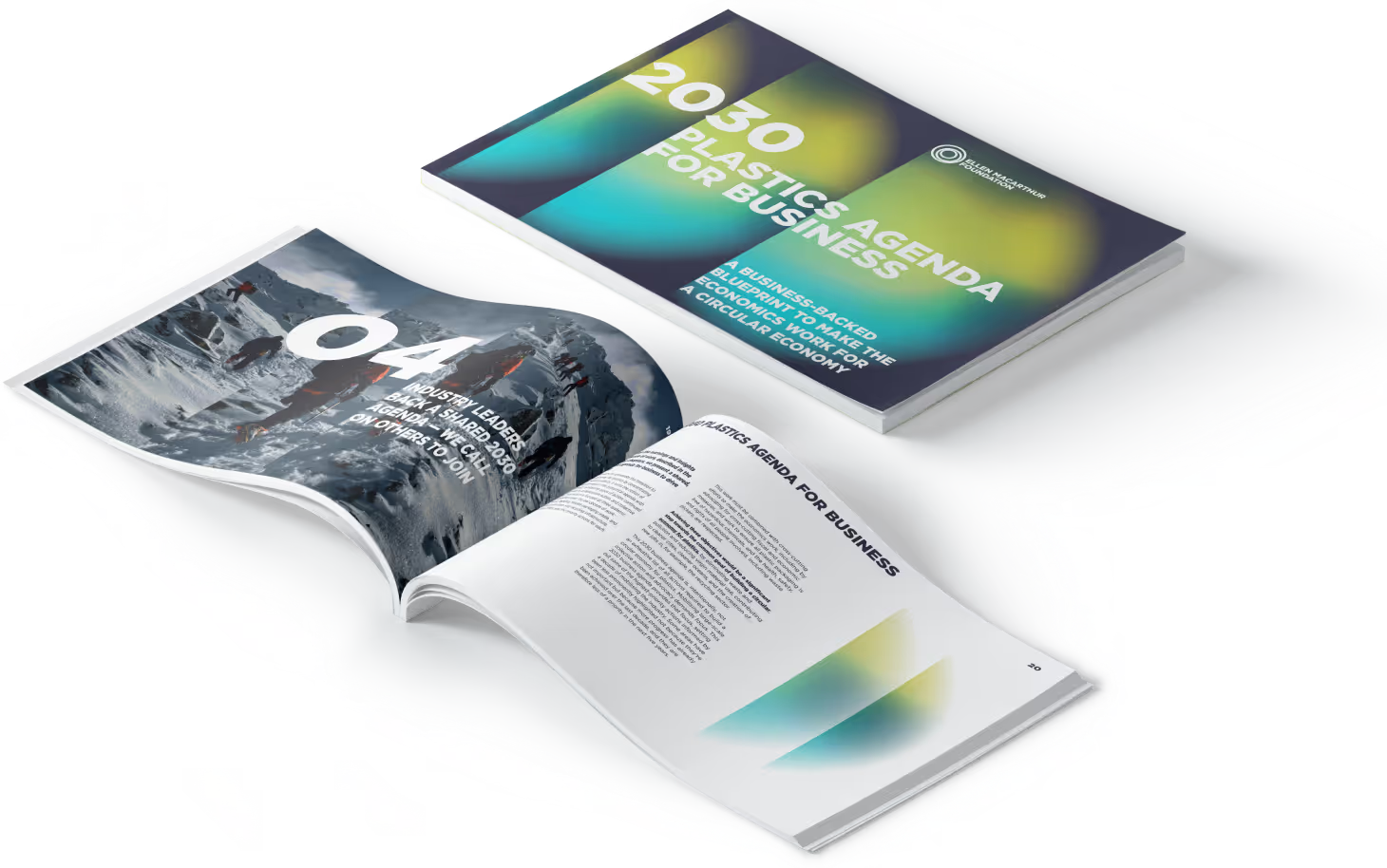
The 2030 Plastics Agenda for Business sets out how organisations can engage in collaborative action, influence effective policy through collective advocacy, and ultimately accelerate the transition to a circular economy.

The 2030 Plastics Agenda for Business sets out how organisations can engage in collaborative action, influence effective policy through collective advocacy, and ultimately accelerate the transition to a circular economy.

The 2030 Plastics Agenda for Business sets out how organisations can engage in collaborative action, influence effective policy through collective advocacy, and ultimately accelerate the transition to a circular economy.

The 2030 Plastics Agenda for Business sets out how organisations can engage in collaborative action, influence effective policy through collective advocacy, and ultimately accelerate the transition to a circular economy.

The 2030 Plastics Agenda for Business sets out how organisations can engage in collaborative action, influence effective policy through collective advocacy, and ultimately accelerate the transition to a circular economy.

Case studies

Case studies

Case studies

Case studies

Case studies

Case studies

RED

Postúlate para unirte a nuestra Red de Plásticos

Únete a más de 1.200 organizaciones unidas por una visión compartida de una economía circular.

Postúlate para unirte a nuestra Red de Plásticos

Únete a más de 1.200 organizaciones unidas por una visión compartida de una economía circular.

Postúlate para unirte a nuestra Red de Plásticos

Únete a más de 1.200 organizaciones unidas por una visión compartida de una economía circular.

Postúlate para unirte a nuestra Red de Plásticos

Únete a más de 1.200 organizaciones unidas por una visión compartida de una economía circular.

Postúlate para unirte a nuestra Red de Plásticos

Únete a más de 1.200 organizaciones unidas por una visión compartida de una economía circular.

Postúlate para unirte a nuestra Red de Plásticos

Únete a más de 1.200 organizaciones unidas por una visión compartida de una economía circular.

SEMINARIO WEB

Transforma tu negocio. Redefine tu mercado: nuestra agenda de plásticos para 2030

Únete a nuestro seminario web para conocer lo que la Fundación y sus socios han aprendido en la última década, el plan y las acciones prioritarias para que las empresas y las políticas impulsen la implementación a gran escala, y el papel que las empresas líderes pueden desempeñar, desde la estrategia hasta la mentalidad y la comunicación.

Transforma tu negocio. Redefine tu mercado: nuestra agenda de plásticos para 2030

Únete a nuestro seminario web para conocer lo que la Fundación y sus socios han aprendido en la última década, el plan y las acciones prioritarias para que las empresas y las políticas impulsen la implementación a gran escala, y el papel que las empresas líderes pueden desempeñar, desde la estrategia hasta la mentalidad y la comunicación.

Transforma tu negocio. Redefine tu mercado: nuestra agenda de plásticos para 2030

Únete a nuestro seminario web para conocer lo que la Fundación y sus socios han aprendido en la última década, el plan y las acciones prioritarias para que las empresas y las políticas impulsen la implementación a gran escala, y el papel que las empresas líderes pueden desempeñar, desde la estrategia hasta la mentalidad y la comunicación.

Transforma tu negocio. Redefine tu mercado: nuestra agenda de plásticos para 2030

Únete a nuestro seminario web para conocer lo que la Fundación y sus socios han aprendido en la última década, el plan y las acciones prioritarias para que las empresas y las políticas impulsen la implementación a gran escala, y el papel que las empresas líderes pueden desempeñar, desde la estrategia hasta la mentalidad y la comunicación.

Transforma tu negocio. Redefine tu mercado: nuestra agenda de plásticos para 2030

Únete a nuestro seminario web para conocer lo que la Fundación y sus socios han aprendido en la última década, el plan y las acciones prioritarias para que las empresas y las políticas impulsen la implementación a gran escala, y el papel que las empresas líderes pueden desempeñar, desde la estrategia hasta la mentalidad y la comunicación.

Transforma tu negocio. Redefine tu mercado: nuestra agenda de plásticos para 2030

Únete a nuestro seminario web para conocer lo que la Fundación y sus socios han aprendido en la última década, el plan y las acciones prioritarias para que las empresas y las políticas impulsen la implementación a gran escala, y el papel que las empresas líderes pueden desempeñar, desde la estrategia hasta la mentalidad y la comunicación.