
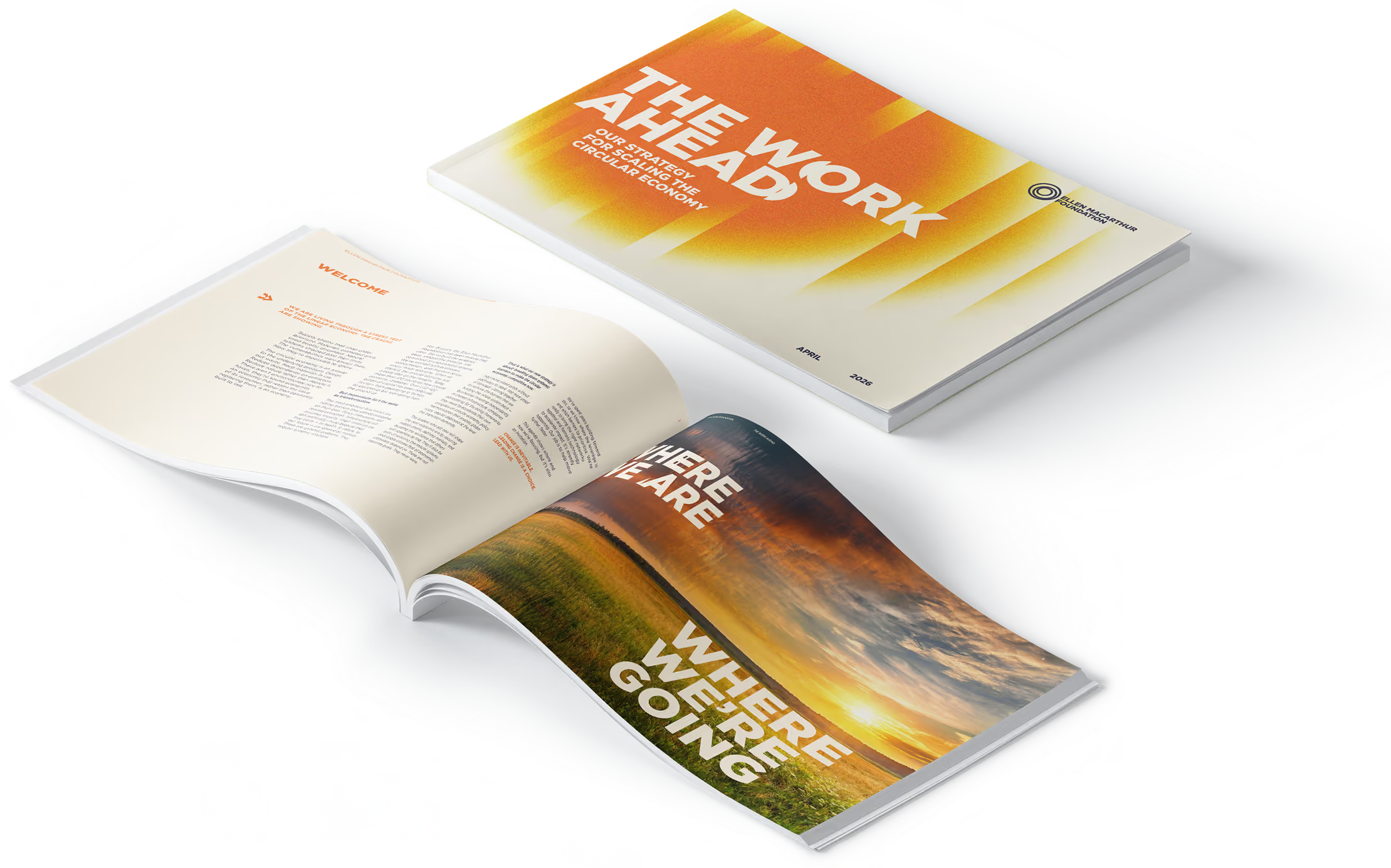
The work ahead: Our strategy for scaling the circular economy
The circular economy transition has reached a critical inflection point. Individual business action has proven the concept. Now we need to come together to turn that into system-level change. The Work Ahead outlines our strategy for this next phase, focusing on three sectors where implementation is urgent, relevant, and ready: plastics and packaging, fashion and textiles, and critical minerals.
The leaders who act now will shape the next economic era. Working with the Foundation gives your organisation something you cannot build alone: a trusted space to address the barriers that matter most, access to a network already aligned behind a shared direction, and direct influence into the policy frameworks being shaped right now.
The circular economy transition has reached a critical inflection point. Individual business action has proven the concept. Now we need to come together to turn that into system-level change. The Work Ahead outlines our strategy for this next phase, focusing on three sectors where implementation is urgent, relevant, and ready: plastics and packaging, fashion and textiles, and critical minerals.
The leaders who act now will shape the next economic era. Working with the Foundation gives your organisation something you cannot build alone: a trusted space to address the barriers that matter most, access to a network already aligned behind a shared direction, and direct influence into the policy frameworks being shaped right now.
The circular economy transition has reached a critical inflection point. Individual business action has proven the concept. Now we need to come together to turn that into system-level change. The Work Ahead outlines our strategy for this next phase, focusing on three sectors where implementation is urgent, relevant, and ready: plastics and packaging, fashion and textiles, and critical minerals.
The leaders who act now will shape the next economic era. Working with the Foundation gives your organisation something you cannot build alone: a trusted space to address the barriers that matter most, access to a network already aligned behind a shared direction, and direct influence into the policy frameworks being shaped right now.
The circular economy transition has reached a critical inflection point. Individual business action has proven the concept. Now we need to come together to turn that into system-level change. The Work Ahead outlines our strategy for this next phase, focusing on three sectors where implementation is urgent, relevant, and ready: plastics and packaging, fashion and textiles, and critical minerals.
The leaders who act now will shape the next economic era. Working with the Foundation gives your organisation something you cannot build alone: a trusted space to address the barriers that matter most, access to a network already aligned behind a shared direction, and direct influence into the policy frameworks being shaped right now.
The circular economy transition has reached a critical inflection point. Individual business action has proven the concept. Now we need to come together to turn that into system-level change. The Work Ahead outlines our strategy for this next phase, focusing on three sectors where implementation is urgent, relevant, and ready: plastics and packaging, fashion and textiles, and critical minerals.
The leaders who act now will shape the next economic era. Working with the Foundation gives your organisation something you cannot build alone: a trusted space to address the barriers that matter most, access to a network already aligned behind a shared direction, and direct influence into the policy frameworks being shaped right now.
The circular economy transition has reached a critical inflection point. Individual business action has proven the concept. Now we need to come together to turn that into system-level change. The Work Ahead outlines our strategy for this next phase, focusing on three sectors where implementation is urgent, relevant, and ready: plastics and packaging, fashion and textiles, and critical minerals.
The leaders who act now will shape the next economic era. Working with the Foundation gives your organisation something you cannot build alone: a trusted space to address the barriers that matter most, access to a network already aligned behind a shared direction, and direct influence into the policy frameworks being shaped right now.
A decisive moment for the circular economy
We are living through a stress test of the linear economy. The cracks are showing.
Supply chains that snap under pressure. Materials extracted once, used briefly, discarded. Natural systems strained past their limits. The vulnerabilities were always there. Now they're impossible to ignore.
The circular economy has answers. An economy that retains the value of its resources, rather than constantly replacing them, is an economy built to last.
Supply chains that snap under pressure. Materials extracted once, used briefly, discarded. Natural systems strained past their limits. The vulnerabilities were always there. Now they're impossible to ignore.
The circular economy has answers. An economy that retains the value of its resources, rather than constantly replacing them, is an economy built to last.
Supply chains that snap under pressure. Materials extracted once, used briefly, discarded. Natural systems strained past their limits. The vulnerabilities were always there. Now they're impossible to ignore.
The circular economy has answers. An economy that retains the value of its resources, rather than constantly replacing them, is an economy built to last.
Supply chains that snap under pressure. Materials extracted once, used briefly, discarded. Natural systems strained past their limits. The vulnerabilities were always there. Now they're impossible to ignore.
The circular economy has answers. An economy that retains the value of its resources, rather than constantly replacing them, is an economy built to last.
Supply chains that snap under pressure. Materials extracted once, used briefly, discarded. Natural systems strained past their limits. The vulnerabilities were always there. Now they're impossible to ignore.
The circular economy has answers. An economy that retains the value of its resources, rather than constantly replacing them, is an economy built to last.
Supply chains that snap under pressure. Materials extracted once, used briefly, discarded. Natural systems strained past their limits. The vulnerabilities were always there. Now they're impossible to ignore.
The circular economy has answers. An economy that retains the value of its resources, rather than constantly replacing them, is an economy built to last.
For 15 years, we have developed the circular economy vision, aligned stakeholders, and shown that circular solutions work in practice. More than 100 countries now have circular economy strategies and over USD 400 billion has been mobilised.
But momentum isn’t the same as transformation.
Even the most ambitious companies are hitting barriers they can’t overcome alone: infrastructure gaps, policy frameworks built for the linear economy, artificially cheap virgin materials. Moving from proof-of-concept to market-wide implementation requires evolving our approach. We need to shift from individual action to systemic intervention.
The Work Ahead outlines our strategy for this next phase: accelerating implementation at scale.
For 15 years, we have developed the circular economy vision, aligned stakeholders, and shown that circular solutions work in practice. More than 100 countries now have circular economy strategies and over USD 400 billion has been mobilised.
But momentum isn’t the same as transformation.
Even the most ambitious companies are hitting barriers they can’t overcome alone: infrastructure gaps, policy frameworks built for the linear economy, artificially cheap virgin materials. Moving from proof-of-concept to market-wide implementation requires evolving our approach. We need to shift from individual action to systemic intervention.
The Work Ahead outlines our strategy for this next phase: accelerating implementation at scale.
For 15 years, we have developed the circular economy vision, aligned stakeholders, and shown that circular solutions work in practice. More than 100 countries now have circular economy strategies and over USD 400 billion has been mobilised.
But momentum isn’t the same as transformation.
Even the most ambitious companies are hitting barriers they can’t overcome alone: infrastructure gaps, policy frameworks built for the linear economy, artificially cheap virgin materials. Moving from proof-of-concept to market-wide implementation requires evolving our approach. We need to shift from individual action to systemic intervention.
The Work Ahead outlines our strategy for this next phase: accelerating implementation at scale.
For 15 years, we have developed the circular economy vision, aligned stakeholders, and shown that circular solutions work in practice. More than 100 countries now have circular economy strategies and over USD 400 billion has been mobilised.
But momentum isn’t the same as transformation.
Even the most ambitious companies are hitting barriers they can’t overcome alone: infrastructure gaps, policy frameworks built for the linear economy, artificially cheap virgin materials. Moving from proof-of-concept to market-wide implementation requires evolving our approach. We need to shift from individual action to systemic intervention.
The Work Ahead outlines our strategy for this next phase: accelerating implementation at scale.
For 15 years, we have developed the circular economy vision, aligned stakeholders, and shown that circular solutions work in practice. More than 100 countries now have circular economy strategies and over USD 400 billion has been mobilised.
But momentum isn’t the same as transformation.
Even the most ambitious companies are hitting barriers they can’t overcome alone: infrastructure gaps, policy frameworks built for the linear economy, artificially cheap virgin materials. Moving from proof-of-concept to market-wide implementation requires evolving our approach. We need to shift from individual action to systemic intervention.
The Work Ahead outlines our strategy for this next phase: accelerating implementation at scale.
For 15 years, we have developed the circular economy vision, aligned stakeholders, and shown that circular solutions work in practice. More than 100 countries now have circular economy strategies and over USD 400 billion has been mobilised.
But momentum isn’t the same as transformation.
Even the most ambitious companies are hitting barriers they can’t overcome alone: infrastructure gaps, policy frameworks built for the linear economy, artificially cheap virgin materials. Moving from proof-of-concept to market-wide implementation requires evolving our approach. We need to shift from individual action to systemic intervention.
The Work Ahead outlines our strategy for this next phase: accelerating implementation at scale.
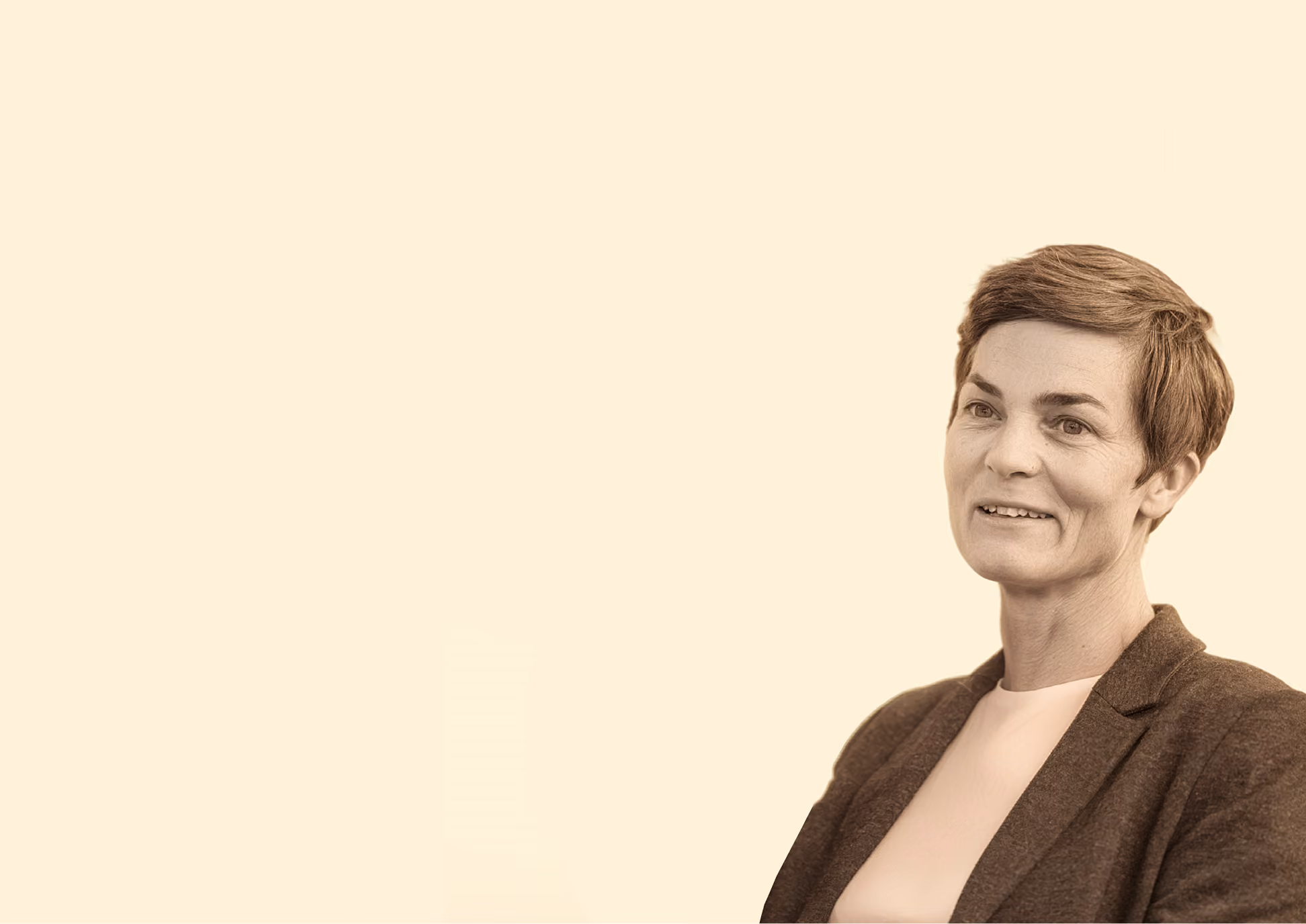

FIFTEEN YEARS AGO, A SMALL TEAM GATHERED IN AN OFFICE ON THE ISLE OF WIGHT WITH AN IDEA THAT SEEMED, TO MANY, IMPOSSIBLY AMBITIOUS: THAT WE COULD CHANGE THE GLOBAL ECONOMY. NOT TINKER WITH IT. CHANGE IT.
What’s in The Work Ahead?








Our approach: breaking down systemic barriers
The circular economy is no longer a fringe idea. It is on the agenda of governments, businesses, and investors worldwide. The challenge now is to overcome the systemic barriers that stand in the way of a circular economy transition at scale.
Systemic barriers stop circular solutions competing with linear business-as-usual – not because circular approaches don’t work, but because current policies, infrastructure, and market incentives favour linear models. These barriers are systemic because no single company can overcome them alone.
Systemic barriers require systemic solutions, so our approach combines three coordinated actions:
The circular economy is no longer a fringe idea. It is on the agenda of governments, businesses, and investors worldwide. The challenge now is to overcome the systemic barriers that stand in the way of a circular economy transition at scale.
Systemic barriers stop circular solutions competing with linear business-as-usual – not because circular approaches don’t work, but because current policies, infrastructure, and market incentives favour linear models. These barriers are systemic because no single company can overcome them alone.
Systemic barriers require systemic solutions, so our approach combines three coordinated actions:
The circular economy is no longer a fringe idea. It is on the agenda of governments, businesses, and investors worldwide. The challenge now is to overcome the systemic barriers that stand in the way of a circular economy transition at scale.
Systemic barriers stop circular solutions competing with linear business-as-usual – not because circular approaches don’t work, but because current policies, infrastructure, and market incentives favour linear models. These barriers are systemic because no single company can overcome them alone.
Systemic barriers require systemic solutions, so our approach combines three coordinated actions:
The circular economy is no longer a fringe idea. It is on the agenda of governments, businesses, and investors worldwide. The challenge now is to overcome the systemic barriers that stand in the way of a circular economy transition at scale.
Systemic barriers stop circular solutions competing with linear business-as-usual – not because circular approaches don’t work, but because current policies, infrastructure, and market incentives favour linear models. These barriers are systemic because no single company can overcome them alone.
Systemic barriers require systemic solutions, so our approach combines three coordinated actions:
The circular economy is no longer a fringe idea. It is on the agenda of governments, businesses, and investors worldwide. The challenge now is to overcome the systemic barriers that stand in the way of a circular economy transition at scale.
Systemic barriers stop circular solutions competing with linear business-as-usual – not because circular approaches don’t work, but because current policies, infrastructure, and market incentives favour linear models. These barriers are systemic because no single company can overcome them alone.
Systemic barriers require systemic solutions, so our approach combines three coordinated actions:
The circular economy is no longer a fringe idea. It is on the agenda of governments, businesses, and investors worldwide. The challenge now is to overcome the systemic barriers that stand in the way of a circular economy transition at scale.
Systemic barriers stop circular solutions competing with linear business-as-usual – not because circular approaches don’t work, but because current policies, infrastructure, and market incentives favour linear models. These barriers are systemic because no single company can overcome them alone.
Systemic barriers require systemic solutions, so our approach combines three coordinated actions:
Set joint direction:
Bring businesses together to identify shared barriers and align on solutions
Set joint direction:
Bring businesses together to identify shared barriers and align on solutions
Set joint direction:
Bring businesses together to identify shared barriers and align on solutions
Set joint direction:
Bring businesses together to identify shared barriers and align on solutions
Set joint direction:
Bring businesses together to identify shared barriers and align on solutions
Set joint direction:
Bring businesses together to identify shared barriers and align on solutions
Mobilise effective collaboration:
Help companies pool resources, share infrastructure, and co-invest to reduce risk and unlock scale
Mobilise effective collaboration:
Help companies pool resources, share infrastructure, and co-invest to reduce risk and unlock scale
Mobilise effective collaboration:
Help companies pool resources, share infrastructure, and co-invest to reduce risk and unlock scale
Mobilise effective collaboration:
Help companies pool resources, share infrastructure, and co-invest to reduce risk and unlock scale
Mobilise effective collaboration:
Help companies pool resources, share infrastructure, and co-invest to reduce risk and unlock scale
Mobilise effective collaboration:
Help companies pool resources, share infrastructure, and co-invest to reduce risk and unlock scale
Advocate collectively:
Unite businesses to call for policies that make circular solutions competitive, while providing real-world evidence for better policy design
Advocate collectively:
Unite businesses to call for policies that make circular solutions competitive, while providing real-world evidence for better policy design
Advocate collectively:
Unite businesses to call for policies that make circular solutions competitive, while providing real-world evidence for better policy design
Advocate collectively:
Unite businesses to call for policies that make circular solutions competitive, while providing real-world evidence for better policy design
Advocate collectively:
Unite businesses to call for policies that make circular solutions competitive, while providing real-world evidence for better policy design
Advocate collectively:
Unite businesses to call for policies that make circular solutions competitive, while providing real-world evidence for better policy design
Our three missions


Over the past 10 years, we’ve set a vision for how the plastic packaging market could work differently. We’ve demonstrated that committed business action drives progress and business-led policy advocacy works. Now we're tackling the systemic barriers that stand in the way of industry-wide transformation: scaling reuse systems, addressing flexible plastic waste, and building collection and recycling infrastructure.
Over the past 10 years, we’ve set a vision for how the plastic packaging market could work differently. We’ve demonstrated that committed business action drives progress and business-led policy advocacy works. Now we're tackling the systemic barriers that stand in the way of industry-wide transformation: scaling reuse systems, addressing flexible plastic waste, and building collection and recycling infrastructure.
Over the past 10 years, we’ve set a vision for how the plastic packaging market could work differently. We’ve demonstrated that committed business action drives progress and business-led policy advocacy works. Now we're tackling the systemic barriers that stand in the way of industry-wide transformation: scaling reuse systems, addressing flexible plastic waste, and building collection and recycling infrastructure.
Over the past 10 years, we’ve set a vision for how the plastic packaging market could work differently. We’ve demonstrated that committed business action drives progress and business-led policy advocacy works. Now we're tackling the systemic barriers that stand in the way of industry-wide transformation: scaling reuse systems, addressing flexible plastic waste, and building collection and recycling infrastructure.
Over the past 10 years, we’ve set a vision for how the plastic packaging market could work differently. We’ve demonstrated that committed business action drives progress and business-led policy advocacy works. Now we're tackling the systemic barriers that stand in the way of industry-wide transformation: scaling reuse systems, addressing flexible plastic waste, and building collection and recycling infrastructure.
Over the past 10 years, we’ve set a vision for how the plastic packaging market could work differently. We’ve demonstrated that committed business action drives progress and business-led policy advocacy works. Now we're tackling the systemic barriers that stand in the way of industry-wide transformation: scaling reuse systems, addressing flexible plastic waste, and building collection and recycling infrastructure.




Critical minerals are essential to sustainably and inclusively delivering the two defining shifts of our era: the energy and digital transitions. Today's linear system cannot deliver the scale of supply needed while managing environmental and social impacts responsibly. A circular economy is an economic imperative to keep critical minerals in use at their highest value, moderate the growth of virgin extraction, and ensure that the transitions the world is depending on are built on resilient, equitable foundations.
Critical minerals are essential to sustainably and inclusively delivering the two defining shifts of our era: the energy and digital transitions. Today's linear system cannot deliver the scale of supply needed while managing environmental and social impacts responsibly. A circular economy is an economic imperative to keep critical minerals in use at their highest value, moderate the growth of virgin extraction, and ensure that the transitions the world is depending on are built on resilient, equitable foundations.
Critical minerals are essential to sustainably and inclusively delivering the two defining shifts of our era: the energy and digital transitions. Today's linear system cannot deliver the scale of supply needed while managing environmental and social impacts responsibly. A circular economy is an economic imperative to keep critical minerals in use at their highest value, moderate the growth of virgin extraction, and ensure that the transitions the world is depending on are built on resilient, equitable foundations.
Critical minerals are essential to sustainably and inclusively delivering the two defining shifts of our era: the energy and digital transitions. Today's linear system cannot deliver the scale of supply needed while managing environmental and social impacts responsibly. A circular economy is an economic imperative to keep critical minerals in use at their highest value, moderate the growth of virgin extraction, and ensure that the transitions the world is depending on are built on resilient, equitable foundations.
Critical minerals are essential to sustainably and inclusively delivering the two defining shifts of our era: the energy and digital transitions. Today's linear system cannot deliver the scale of supply needed while managing environmental and social impacts responsibly. A circular economy is an economic imperative to keep critical minerals in use at their highest value, moderate the growth of virgin extraction, and ensure that the transitions the world is depending on are built on resilient, equitable foundations.
Critical minerals are essential to sustainably and inclusively delivering the two defining shifts of our era: the energy and digital transitions. Today's linear system cannot deliver the scale of supply needed while managing environmental and social impacts responsibly. A circular economy is an economic imperative to keep critical minerals in use at their highest value, moderate the growth of virgin extraction, and ensure that the transitions the world is depending on are built on resilient, equitable foundations.


For almost a decade, we have built a strong vision for a circular economy for fashion and textiles with a committed network of pioneering companies and policymakers. After demonstrating that designing circular garments is possible and circular business models offer opportunities for new and better growth, we are now developing the 2040 Agenda for Fashion and Textiles to define a shared destination for the industry and translate it into an action plan for business, finance, and policy.
For almost a decade, we have built a strong vision for a circular economy for fashion and textiles with a committed network of pioneering companies and policymakers. After demonstrating that designing circular garments is possible and circular business models offer opportunities for new and better growth, we are now developing the 2040 Agenda for Fashion and Textiles to define a shared destination for the industry and translate it into an action plan for business, finance, and policy.
For almost a decade, we have built a strong vision for a circular economy for fashion and textiles with a committed network of pioneering companies and policymakers. After demonstrating that designing circular garments is possible and circular business models offer opportunities for new and better growth, we are now developing the 2040 Agenda for Fashion and Textiles to define a shared destination for the industry and translate it into an action plan for business, finance, and policy.
For almost a decade, we have built a strong vision for a circular economy for fashion and textiles with a committed network of pioneering companies and policymakers. After demonstrating that designing circular garments is possible and circular business models offer opportunities for new and better growth, we are now developing the 2040 Agenda for Fashion and Textiles to define a shared destination for the industry and translate it into an action plan for business, finance, and policy.
For almost a decade, we have built a strong vision for a circular economy for fashion and textiles with a committed network of pioneering companies and policymakers. After demonstrating that designing circular garments is possible and circular business models offer opportunities for new and better growth, we are now developing the 2040 Agenda for Fashion and Textiles to define a shared destination for the industry and translate it into an action plan for business, finance, and policy.
For almost a decade, we have built a strong vision for a circular economy for fashion and textiles with a committed network of pioneering companies and policymakers. After demonstrating that designing circular garments is possible and circular business models offer opportunities for new and better growth, we are now developing the 2040 Agenda for Fashion and Textiles to define a shared destination for the industry and translate it into an action plan for business, finance, and policy.
Read The Work Ahead

Let's talk
Interested in working with us? We want to hear from you. Tell us a bit about your organisation and we’ll contact you to schedule a call.
Let's talk
Interested in working with us? We want to hear from you. Tell us a bit about your organisation and we’ll contact you to schedule a call.
Let's talk
Interested in working with us? We want to hear from you. Tell us a bit about your organisation and we’ll contact you to schedule a call.
Let's talk
Interested in working with us? We want to hear from you. Tell us a bit about your organisation and we’ll contact you to schedule a call.
Let's talk
Interested in working with us? We want to hear from you. Tell us a bit about your organisation and we’ll contact you to schedule a call.
Let's talk
Interested in working with us? We want to hear from you. Tell us a bit about your organisation and we’ll contact you to schedule a call.